Wow! I was fiddling with my backup keys the other night. My instinct said don’t store private keys on a phone, but then I held this tiny plastic card and thought, hmm… Could that card be the bridge between convenience and real security? Initially I thought hardware meant bulky dongles, but then realized cards change the equation because they feel like something you can lose without losing everything.
Here’s the thing. Contactless smart-card wallets put the key into a tamper-resistant element you can touch and carry in a wallet. They let your phone be the interface, not the vault, which is exactly how people want to use crypto today. On one hand that reduces friction dramatically, though actually there are trade-offs around backup and recovery that people gloss over. My first impression was skeptical—seriously, how many more gadgets?—but once I tested a card-based flow I started to see the real upside.
Whoa! Using near-field communication feels native. You tap to sign a transaction and the card does the heavy lifting. That small hardware barrier prevents many common mobile compromises, and it’s a lot less awkward than USB sticks when you’re out and about. I should say I’m biased toward anything that reduces seed phrase drama, and this approach does that very very well.
Okay, so check this out—wallet UX finally matters. Phones have better screens, notifications, and biometrics, so pairing them to a smart card gives users a friendly experience without moving secrets into the phone. On a deeper level, this separation maps to threat models: remote malware on a phone typically can’t extract keys from a properly designed smart-card chip, though physical attacks are still a worry. I’m not 100% sure the average user will grasp those nuances, but the flow feels simpler.
How the mobile + contactless model actually works
At a basic level you pair a smart card to your mobile wallet app and use NFC to authorize payments. The keys never leave the card, which signs transactions inside a secure element. The app sends an unsigned transaction to the card, the card signs it, and the app broadcasts it. That split keeps the user experience smooth while minimizing attack surface.
Seriously? Recovery matters more than people think. If you lose the card, you need a safe recovery plan that balances convenience and security. Some systems use social recovery, some use multi-card backups, and others integrate with cold backups printed in steel. Initially I dismissed the backup options as cumbersome, but then realized a layered approach—one card for daily use, one stored securely as a backup—works well for most folks.
I’ll be honest: this part bugs me. Too many products treat recovery as an afterthought and assume users will follow complex instructions. My practical experience is that a slightly clumsy but explained backup beats a perfect system that users ignore. (Oh, and by the way…) some solutions let you mint a backup card in minutes, which is neat but also increases risk if you don’t secure the backup properly.
From a developer perspective, contactless signing reduces dependency on platform-specific APIs and grants a more universal interface across Android devices. iOS is trickier because of NFC limitations historically, though that’s changing. On the ground, interoperability is improving but fragmented standards mean the best experience is still with ecosystems that design end-to-end flows carefully. Something felt off about vendors promising one-size-fits-all compatibility—there’s always nuance here.
Check this out—if you want a real-world runner-up to cold storage, a smart card paired to a mobile app is it. I used one for everyday small-value transactions while keeping a hardware seed in a separate location for large holdings. That hybrid approach matched my risk tolerance and my need to pay a barista quickly. The friction was almost zero, and I liked that; my friends noticed and asked where they could get one.
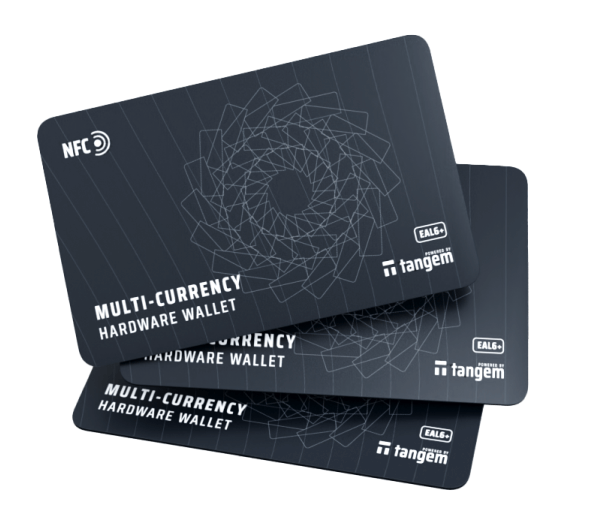
For anyone curious, the market has matured fast. Products like the tangem hardware wallet show how a slim, card-like form factor can be both secure and user-friendly. Tangem’s wallets focus on contactless UX and minimal setup, which is exactly the consumer promise that tends to sell. I’m not endorsing blindly—there are nuances in firmware, supply chain, and recovery that deserve attention—but the design direction is solid.
On the security side, there are clear strengths and inevitable caveats. A certified secure element resists many software attacks and side-channel exploits, though no device is invincible. If someone physically steals and attacks your card, extraction is non-trivial but theoretically possible with high-end lab tools. Still, compared to storing keys in a mobile app’s filesystem or a cloud backup, a smart card significantly raises the bar for attackers.
Something else to weigh: convenience and adoption. People will accept a small card that fits in a wallet far more readily than they accept seed phrase ceremonies. Seriously—most users will trade a tiny bit of absolute-perfect security for a realistic, usable workflow that they can rely on day-to-day. Initially I thought purist models would dominate, but reality shows the opposite: usability drives adoption, and security follows adoption if implemented thoughtfully.
Here’s another honest bit—supply chain matters. You can design a great product, but if the cards are counterfeit or delivered tampered, the model fails. My instinct said never trust an unvetted seller, so buy from reputable channels or directly. Also, companies should offer verifiable attestation methods so users can confirm a card is genuine without relying on blind faith.
Speaking of trust, the ecosystem needs better education. Wallet apps must present clear, plain-language prompts about what a card is signing, and duplicate checks should be standard. On one hand these checks are straightforward, though on the other they require product teams to resist the temptation to hide details for UX simplicity. I’m biased, but transparency reduces phishing success and builds trust long-term.
Frequently asked questions
Can I use a contactless smart-card wallet for daily payments?
Yes, for sure. These cards are built for small to medium on-the-go payments and signing transactions through your phone’s app. They’re quick, private-key-protective, and feel like using a contactless debit card—just with crypto under the hood.
What happens if I lose the card?
You need a recovery plan. Options include a backup card stored securely, a recovery seed held in cold storage, or social recovery schemes. Pick the approach that matches how much you hold and how comfortable you are with complexity.
Are contactless cards safer than storing keys on my phone?
Generally yes. Smart-card chips isolate keys and resist extraction attacks that infect apps or the phone’s OS. They’re not unbreakable, but they significantly reduce common attack vectors against mobile wallets.