I was poking around my wallet last week and something jumped out at me. Wow! The on-chain visibility on Solana feels different from other chains. My first glance made me think it was all noise, but then I followed a transaction trail and suddenly saw the pattern. Initially I thought the explorers were all the same, but then I realized Solana tooling required a different approach because of throughput and parallelization quirks.
Check this out—tracking a token on Solana can be fast and messy at the same time. Really? There are thousands of SPL tokens and many have very similar names. Over time you learn to look for mint addresses, not just token labels, and that change in habit saved me from buying a rug token. On one hand the ecosystem moves quick; though actually the explorer tooling can help you keep up if you know where to look.
I’m biased, but the first thing that bugs me about generic explorers is the clutter. Here’s the thing. Solana explorers that focus on UX and data slicing reduce that clutter a lot. My instinct said pick the explorer that surfaces relevant metadata like holders, transfers, and program ids quickly. After a few weeks of using it daily I noticed my research time dropped.
Whoa! The speed is obvious when you load a block or transaction. Hmm… it feels immediate. The explorer renders large lists without freezing, which matters when you’re chasing an airdrop or a rug. Longer response times make you second-guess things, and second-guessing kills opportunities in this market. So performance isn’t just a convenience—it’s strategic.
I want to be practical here. Wow! One of my go-to tasks is validating token mints and ownership. When a new token pops up, I open the token page and scan holders and largest transfers. That quick scan answers 70% of the “is-this-scam?” question for me.
Okay, so check this: wallet analytics are more revealing than you might expect. Really? You can see program interactions and grouped transactions which explain weird balance changes. I often trace activity back to a program id to see if it’s a dex, a staking program, or something bespoke. That context shifts a shallow “what happened?” into a deeper “why did it happen?”
I’m not 100% sure why some teams don’t document their program ids more clearly. Here’s the thing. When you can tag a program consistently across transactions, patterns emerge faster and trust builds. My recommendation is to prefer explorers that let you annotate or that already display well-curated metadata. That practice saves time and reduces mistakes, especially for high-volume traders.
Seriously? Alerts and watchlists make a surprising difference. Wow! I set up a few monitors for whale transfers and new mints that match name patterns of coins I follow. The alerts cut through the inbox noise so I can react within minutes, not hours, and sometimes that difference is huge. This is the kind of tooling that turns passive holders into informed participants.
Transaction decoding matters a lot to me. Hmm… many transactions hide several inner instructions and cross-program calls. Initially I thought simple logs were enough, but then I realized the inner instruction breakdown tells you which program actually moved funds. That clarity prevented me from misattributing a change to a wallet when it was a program rebalancing funds.
Here’s a real-world little trick I use. Wow! Click into the largest holder list and then sort by recent activity. You quickly separate long-term holders from active flippers. That helps when assessing token health beyond raw holder counts. On some tokens a huge holder sitting idle suggests centralization risk, and I avoid those unless there’s transparent vesting.
The on-chain charting is another underrated piece. Really? Small spikes and micro-patterns in transfers are visible if you chart transfers per hour instead of price. I like to correlate transfer volume to liquidity pool changes, and that often explains price moves before they show up in typical markets. It’s a detective habit—follow the money, not the chart.
I’ll be honest—no explorer is perfect. Wow! There are rare cases where metadata is wrong or outdated. Actually, wait—let me rephrase that, sometimes the metadata lags because teams don’t register changes properly. That’s why cross-checking with verified sources and the mint account details is very very important. When in doubt, validate the mint address against the project’s official channels.
Oh, and by the way… the search experience matters more than you think. Wow! Autocomplete that surfaces mints, programs, and addresses with context saves a lot of clicks. I often use the search to jump from token to associated program and then to recent transactions, and that path reveals operational behavior not shown on the token overview. It’s a small UX win with outsized research impact.
Image time. Check this out—
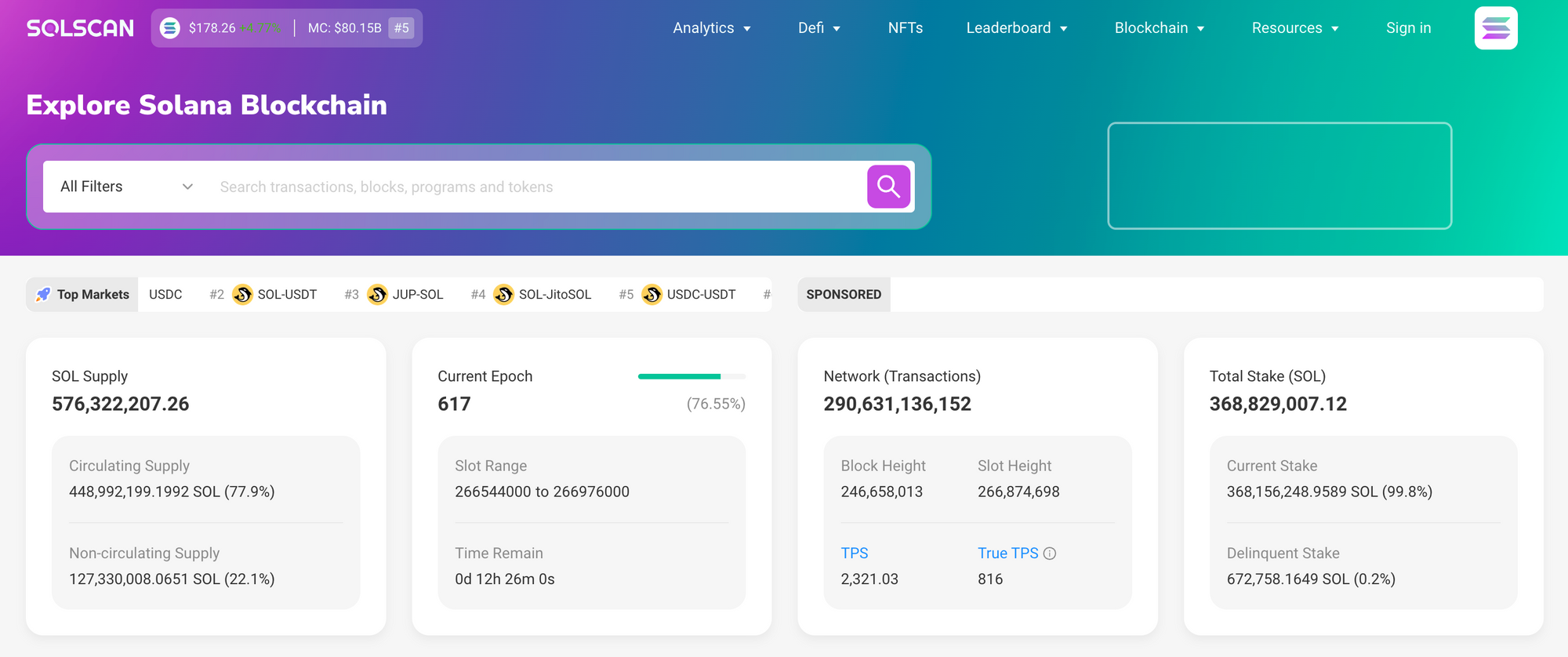
How I Use Solana Analytics for Better Decisions
First, identify the mint and scan holders quickly to see distribution and concentration. Here’s the thing. Second, inspect recent transfers and program interactions to catch airdrops, burns, or rebalances. I use solscan as the quick gateway because the pages are dense with the right signals and I can usually answer the core questions in under a minute. Third, set alerts for large transfers and new mints with similar names to tokens you follow. That routine protects you from copycat scams and accidental swaps.
One nuance that trips people up is token decimals and supply formatting. Wow! A token that lists supply without decimals can look massive or tiny depending on display settings. My instinct said trust the raw on-chain integer, and then adjust for decimals manually if needed. Learning that early saved me from confusing a 1,000,000 raw supply for something else.
There are also deeper analytics you can run. Really? Look at token age versus active holders and then overlay transfer frequency. When age is high but transfers are low, the token might be a dormant asset or a governance token. Conversely, new tokens with explosive transfer counts deserve extra scrutiny. This kind of layered analysis takes a few minutes once you have the habit.
Okay, so here’s what bugs me about shallow token metrics. Wow! Relying solely on holder count or top holders gives a false sense of security. On one hand high holder count can be bullish; though actually it can also be a sign of airdrop farming or dust accounts. So check transaction recency and the distribution curve before making decisions.
FAQ
How can I quickly verify a token is legit?
Start with the mint address and match it to official channels, then review holders and recent transfers for unusual activity. Wow! Check the program ids involved in major transfers and look for known DEX or staking programs. If anything smells off, pause and dig deeper—somethin’ could be out of place.
Do explorers show everything I need?
No, not everything. Really? Explorers surface on-chain facts but they can’t tell you off-chain intentions or private agreements. Use them as a source of truth for on-chain events and combine with official project communications for the full story.